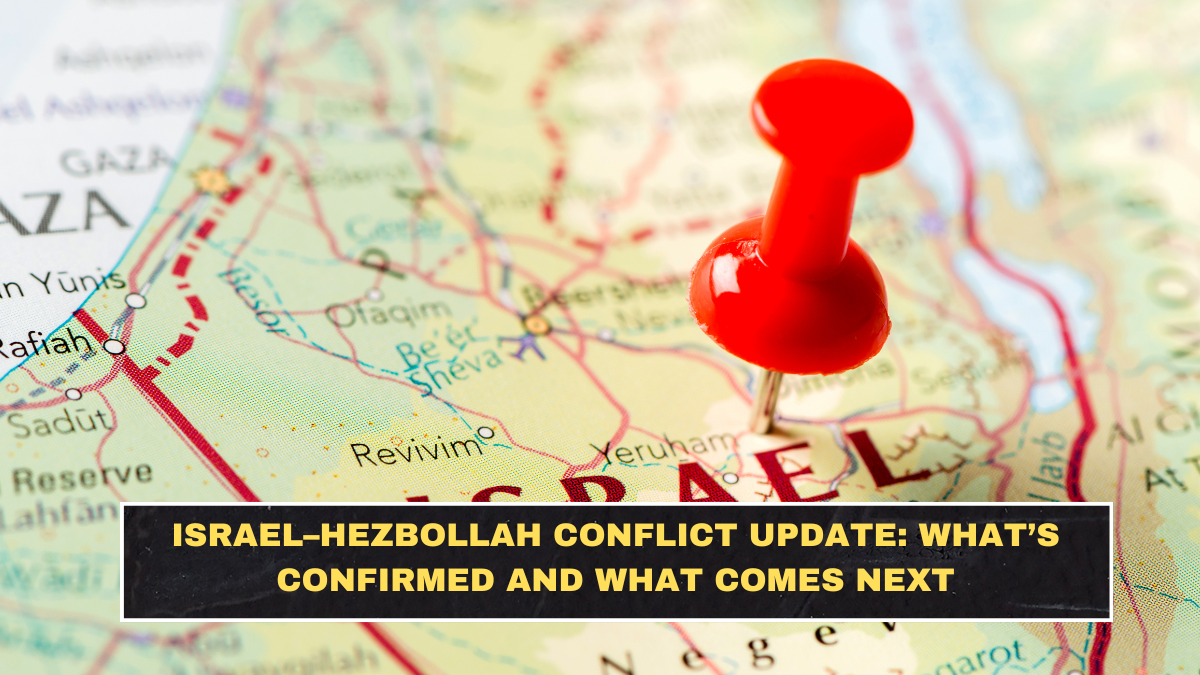
The Israel–Hezbollah situation is trending due to fresh reports of cross-border tensions and strikes involving southern Lebanon. The spike in searches is tied to real-time updates, not speculation—people are trying to separate confirmed military actions from exaggerated claims circulating online.
This conflict is not new. It has existed for decades, but every new escalation triggers global attention because of the risk of a wider regional conflict.
What Is Officially Confirmed
Based on verified reporting patterns and official statements, the following points are consistently confirmed in recent updates:
-
Cross-border exchanges have occurred between Israel and Hezbollah positions
-
Israeli forces have conducted strikes targeting locations in southern Lebanon
-
Hezbollah has responded with rocket or projectile fire toward northern Israel
-
Civilian areas near the border have faced evacuation or heightened alert
These are not isolated incidents—they follow an ongoing pattern of escalation along the Israel–Lebanon border.
What Is Still Disputed or Unclear
This is where most misinformation spreads.
What remains unclear or disputed:
-
Exact casualty figures in many incidents
-
Specific targets and their military significance
-
Claims of large-scale escalation beyond border regions
-
Intent behind each strike (defensive vs offensive narratives differ)
Both sides often release statements supporting their own version of events, which makes independent verification critical.
Key Conflict Snapshot
| Factor | Current Status (Based on Reports) | What It Means |
|---|---|---|
| Border Tensions | Active cross-border exchanges | Ongoing low-to-mid intensity conflict |
| Israeli Airstrikes | Confirmed in southern Lebanon | Targeting militant infrastructure |
| Hezbollah Response | Rocket/projectile fire | Retaliatory pattern continues |
| Civilian Impact | Evacuations and alerts | Rising humanitarian concern |
This table reflects the pattern—not a single isolated incident.
Why This Conflict Matters Globally
This isn’t just a border issue. The Israel–Hezbollah conflict is closely tied to broader Middle East geopolitics.
Key reasons it matters:
-
Hezbollah is backed by Iran, linking this conflict to wider regional dynamics
-
Any escalation risks involving multiple countries
-
Global markets react to instability in the Middle East
This is why even limited clashes trend globally—they carry the potential for rapid escalation.
Impact on India and Global Markets
For India, the concern is not direct involvement but indirect impact.
Potential areas affected:
-
Oil prices (Middle East instability affects supply sentiment)
-
Shipping routes and insurance costs
-
Indian diaspora safety in the region
As of now, there is no confirmed disruption to oil supply or Indian operations directly tied to this conflict escalation.
What to Watch Next (Real Indicators)
If you actually want to understand where this is heading, track these:
-
Official military statements from Israel Defense Forces (IDF)
-
Hezbollah’s public communications
-
UN or international diplomatic responses
-
Any expansion beyond border areas
Ignore viral posts claiming “full war” unless backed by official confirmation. Most of them are premature.
Conclusion
The Israel–Hezbollah conflict is trending because of real, confirmed border tensions—not because of a declared full-scale war.
The situation remains serious but controlled within a pattern of ongoing escalation. There is no confirmed evidence of a wider regional war at this stage.
If you’re relying on social media headlines, you’re likely overestimating the scale. The actual situation is tense—but still within a known conflict pattern.
FAQs
What is happening between Israel and Hezbollah right now?
There are confirmed cross-border exchanges, including Israeli strikes and Hezbollah responses, mainly along the Lebanon border.
Has a full-scale war started?
No, there is no confirmed declaration of full-scale war. The situation remains limited to ongoing border tensions.
Why is this conflict important globally?
Because of its connection to wider Middle East geopolitics and the risk of escalation involving multiple countries.
Does this affect India?
Indirectly, through oil prices and regional stability. There is no confirmed direct impact on India currently.
Click here to know more.