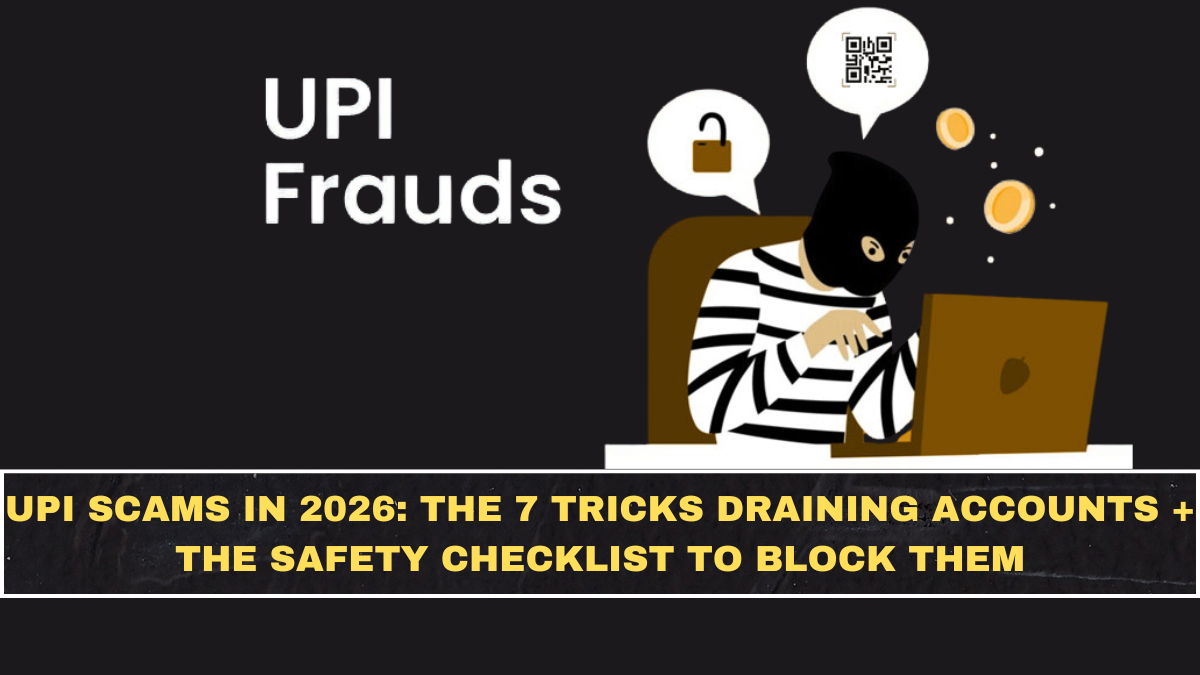
Digital payments have transformed financial transactions in India, but they have also created new risks. With increasing usage of instant payment systems, fraudsters continue to evolve tactics that exploit user behavior rather than technology loopholes. Understanding UPI fraud prevention is now essential for every digital payment user.
In 2026, payment scams are becoming more sophisticated, targeting individuals through fake calls, QR codes, and psychological manipulation. Most losses happen not because of system failure but due to user mistakes. Awareness and simple verification habits can prevent nearly all fraud attempts.
Here is a practical guide to the most common UPI scams and a safety checklist that protects your money.
Why UPI Frauds Are Increasing
The rapid adoption of digital payments has increased exposure to fraud risks.
Key reasons for rising scams include:
-
High number of new users
-
Instant transaction processing
-
Social engineering techniques
-
Lack of user awareness
-
Increased online marketplace activity
Fraudsters rely more on psychological tactics than technical hacking.
Collect Request Scam
One of the most common frauds involves fake payment requests.
How it works:
-
Fraudster sends “collect request” instead of payment
-
User assumes money will be received
-
User enters UPI PIN
-
Money gets deducted
Important rule:
Entering UPI PIN always sends money, never receives it.
Fake QR Code Scam
QR code fraud is increasingly used in online sales and classified platforms.
Typical scenario:
-
Seller shares QR code for receiving payment
-
User scans code to “receive” money
-
Payment gets deducted instead
QR codes are only for making payments, not receiving funds.
OTP and Screen Sharing Fraud
Fraudsters manipulate users through fake support calls.
Common tactics:
-
Claim account problem
-
Request OTP
-
Ask to install screen-sharing apps
-
Access banking apps remotely
Never share OTP or allow remote access.
Fake Customer Care Numbers
Many victims contact fake helpline numbers found online.
How it happens:
-
Fake numbers appear in search results
-
Caller pretends to be bank executive
-
Requests sensitive information
-
Transfers money fraudulently
Always verify official support channels.
Payment Reversal Fraud
Fraudsters create confusion during online transactions.
Typical approach:
-
Claim payment failed
-
Request refund manually
-
Send fake proof of transfer
-
Convince user to transfer money
Always check bank confirmation before acting.
KYC Update Scams
Fraudsters impersonate bank officials to update account details.
Common signs:
-
Urgent KYC deadline warning
-
Suspicious links
-
Request for personal data
-
Threat of account blocking
Banks never ask sensitive details through calls or messages.
Prize and Cashback Fraud
Fake offers attract users into sharing details.
Typical fraud process:
-
Promise reward or cashback
-
Ask small processing fee
-
Request account details
-
Deduct large amount
Unsolicited rewards are often fraudulent.
The Complete UPI Safety Checklist
A structured UPI fraud prevention checklist can eliminate most risks.
Essential safety practices:
-
Never share UPI PIN or OTP
-
Verify payment requests carefully
-
Avoid unknown QR codes
-
Ignore urgent payment demands
-
Use official banking apps only
-
Check transaction alerts instantly
-
Enable SMS and app notifications
Simple habits prevent major losses.
How to Identify Suspicious Transactions
Early detection reduces financial damage.
Warning signs include:
-
Unexpected payment request
-
Unknown beneficiary
-
Urgent action pressure
-
Mismatched transaction details
-
Repeated small deductions
Immediate action limits loss.
What to Do If You Become a Victim
Quick response increases chances of recovery.
Immediate steps:
-
Inform bank immediately
-
Block UPI access
-
Report to payment app
-
File cybercrime complaint
-
Preserve transaction evidence
Fast reporting improves recovery chances.
How Banks and Payment Platforms Improve Security
Financial institutions continue strengthening digital payment safety.
Security measures include:
-
Multi-factor authentication
-
Transaction alerts
-
Fraud monitoring systems
-
Risk-based verification
-
Customer awareness programs
User awareness remains the strongest protection.
Why Awareness Is the Best Protection
Technology alone cannot stop fraud if users unknowingly authorize transactions.
User responsibility includes:
-
Verifying transactions
-
Understanding payment process
-
Avoiding emotional decisions
-
Staying informed about new fraud tactics
Financial awareness strengthens security.
Conclusion
Digital payments offer convenience but require responsible usage. Most UPI fraud cases occur due to lack of awareness rather than system failure. Understanding common scams and following basic safety practices can prevent financial loss.
A proactive approach to UPI fraud prevention ensures secure transactions, protects personal finances, and builds confidence in digital payment systems. Awareness and caution remain the most effective defense against evolving payment scams.
FAQs
Can money be received by entering UPI PIN?
No, entering UPI PIN always authorizes sending money.
Is it safe to scan QR code to receive payment?
No, QR codes are used only for making payments.
What should I do if I share my UPI PIN accidentally?
Immediately contact your bank and block transactions.
How quickly should fraud be reported?
Fraud should be reported immediately to improve recovery chances.
Do banks ask for OTP or PIN over phone calls?
No, banks never request sensitive information through calls or messages.