If you’re checking the Winter Olympics 2026 medal tally, you’re not just looking for a list of countries. You’re trying to understand who’s actually leading, who’s quietly stacking medals without the hype, and which nations are rising because of one strong sport rather than “overall dominance.” Medal tables can look simple, but the story behind them changes fast once multi-medal sports start piling up.
Also, don’t confuse “most medals” with “best Olympics.” The medal table is usually sorted by gold first, not total. That means one country can have fewer total medals and still rank higher, because gold medals carry the biggest weight in the official ranking logic. Once you understand that, the table becomes much easier to read without getting misled.
Winter Olympics 2026 Medal Tally (Top Countries Right Now)
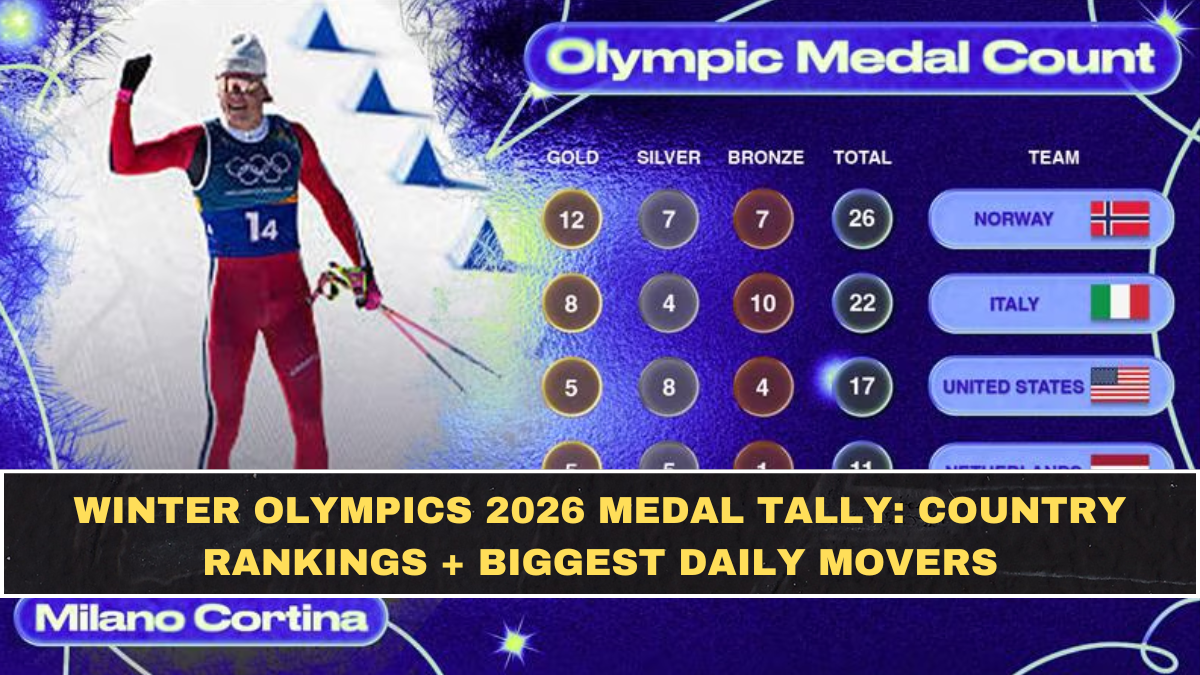
Here’s the snapshot that most people want first: the top of the table, with gold, silver, bronze, and total. This is the cleanest way to track momentum without getting lost in sport-by-sport noise. It also helps you spot whether a country is winning big events (gold-heavy) or consistently placing (silver/bronze-heavy).
Top 3 right now:
| Rank | Country | Gold | Silver | Bronze | Total |
|---|---|---|---|---|---|
| 1 | Norway | 14 | 8 | 9 | 31 |
| 2 | Italy | 9 | 4 | 11 | 24 |
| 3 | United States | 6 | 10 | 5 | 21 |
This is why the Winter Olympics 2026 medal tally keeps trending: the top positions can stay stable while the gap underneath shifts daily. A single strong day in speed events or a surprise podium in snow sports can move countries multiple ranks in one update.
What Changed Today (The Simple “Mover” Story)
Daily movement isn’t always about one superstar. Often it’s about team events and endurance-heavy sports that hand out medals in clusters. When a nation wins a relay or places multiple athletes in one event, the medal count jumps quickly and the table reshuffles even if casual viewers didn’t watch that event live.
One of the clearest “today” drivers has been biathlon and Nordic disciplines delivering decisive results and reshaping totals. These sports don’t just reward one athlete; they can reward an entire system—depth, consistency, and the ability to perform under pressure. That’s why a “quiet” country can suddenly look dominant in the numbers.
Gold vs Total: The Mistake Most People Make
Here’s the trap: people see “31 total” and assume Norway is running away with everything. But the real reason they stay at the top is the gold count. If another country closes the gold gap, the table can tighten very fast even if totals still favor the leader.
At the same time, countries with higher silver totals can look “weaker” than they really are. Consistent top-three finishes show depth, and that depth often turns into late-stage golds as confidence builds. So don’t read the medal tally like a scoreboard only—read it like a trend line of form and momentum.
Why Some Countries Surge Mid-Games
Surges usually happen when a nation hits its strongest sport window. Some countries are built for snow events early in the schedule, while others peak during skating-heavy phases or technical events where experience matters more than raw risk. When that window arrives, medals stack quickly and the country looks like it “suddenly woke up.”
Home advantage can also matter in a very practical way: familiarity with conditions, travel fatigue being lower, and crowd energy adding pressure on competitors. That doesn’t guarantee wins, but it can help athletes deliver cleaner runs and calmer performances—especially in events where one mistake ruins everything.
How to Use the Medal Tally Without Overreacting
If you’re following the Winter Olympics 2026 medal tally daily, stop reacting to every small change like it’s permanent. The table swings because medal clusters come in waves. A nation that looks stuck today can jump tomorrow if a strong sport day hits.
The smarter approach is to watch three signals: gold momentum (who’s adding golds), multi-medal sports (who’s dominating events that repeat), and consistency (who’s regularly on podiums). Those three together tell you who is truly strong, not just lucky on one day.
Conclusion
The Winter Olympics 2026 medal tally right now shows Norway leading with a gold-heavy advantage, Italy holding strong in second with an impressive overall total, and the United States staying close in the top three with a silver-heavy profile. The real story isn’t just “who leads,” but how nations are building momentum through their strongest sports.
If you want to follow this like a pro, track gold movement, watch for relay and endurance event days, and avoid overreacting to one-day swings. Medal tables are a daily narrative, not a final verdict—until the last events are done.
FAQs
What is the current Winter Olympics 2026 medal tally top 3?
Right now, Norway leads with 31 total medals, Italy is second with 24, and the United States is third with 21.
Is the medal table ranked by total medals or gold medals?
Official Olympic-style rankings prioritize gold medals first, then silver, then bronze. Total medals can be higher for a country but still rank lower if gold count is lower.
Why do medal tallies change so quickly in a single day?
Because some sports award medals in clusters, and team events like relays can add medals fast. One strong day can move a country several ranks.
Which countries are making the biggest jumps during the Games?
Big jumps usually come when a country reaches its strongest sport window or wins team/endurance events that add medals quickly.
How should casual viewers track the medal tally without getting confused?
Focus on gold momentum, consistency of podium finishes, and which sports are awarding multiple medals. That gives a clearer picture than reacting to rank changes alone.
Click here to know more.