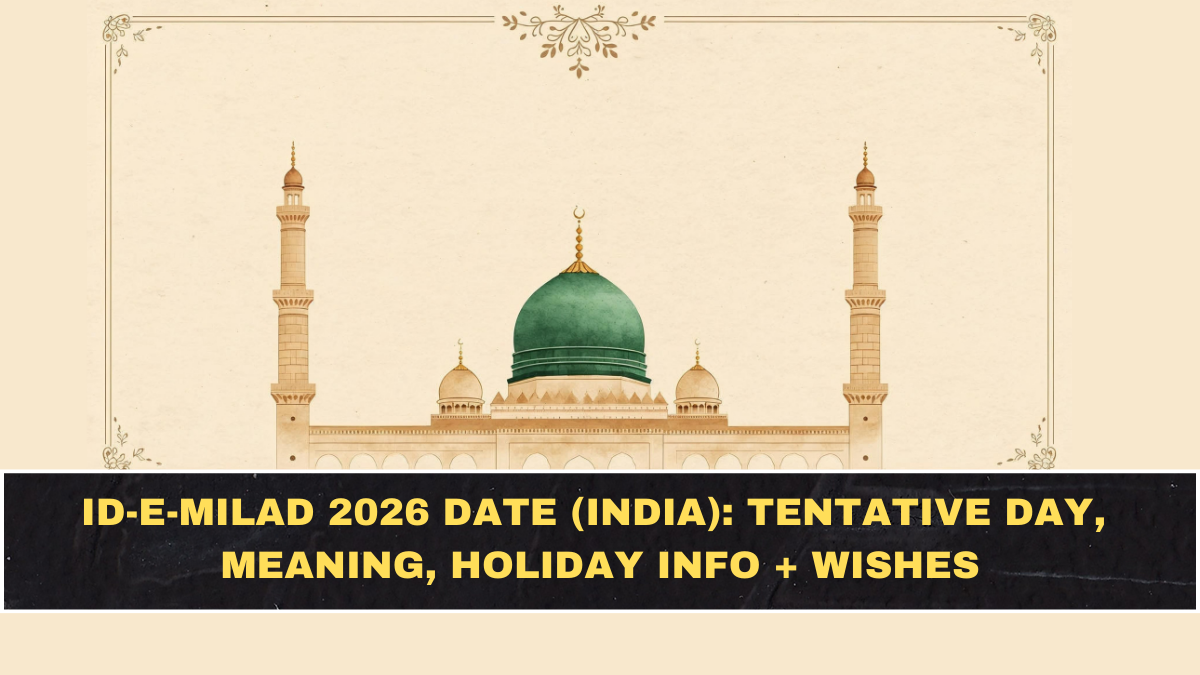
Id-e-Milad, also known as Milad-un-Nabi, is observed to commemorate the birth of Prophet Muhammad. The day is marked by reflection, prayer, and remembrance rather than loud celebration. Across India, Id-e-Milad carries both religious and social significance, emphasizing compassion, humility, and ethical conduct in everyday life.
Many people search for clarity every year regarding the exact date, whether it is a public holiday, and how the day is traditionally observed. Since the Islamic calendar follows lunar cycles, uncertainty around dates is common. This guide on Id-e-Milad 2026 explains the tentative date, significance, holiday status, and appropriate ways people observe and acknowledge the day.

Id-e-Milad 2026 Tentative Date in India
Id-e-Milad 2026 in India is expected to be observed on 26/08/2026, subject to moon sighting. The festival falls on the 12th day of Rabi’ al-Awwal in the Islamic calendar, which means the exact date is confirmed only after the crescent moon is sighted.
Because of this, the observance may shift by one day depending on regional moon sighting announcements. Government holiday notifications and school calendars are usually updated once confirmation is received. Using numeric date formats helps reduce confusion across regions and official listings.
Is Id-e-Milad a Public Holiday in India
Id-e-Milad is recognized as a public holiday in many parts of India. Government offices, banks, and educational institutions often remain closed, particularly in states with a significant Muslim population. In other regions, it may be observed as a restricted or optional holiday.
Private-sector policies vary widely, with some organizations granting a full holiday and others offering flexible leave. Employees are advised to verify local holiday lists and workplace notices rather than relying on national assumptions.
Religious Meaning and Significance of Id-e-Milad
Id-e-Milad commemorates the birth of Prophet Muhammad, whose teachings form the foundation of Islam. The day highlights values such as kindness, justice, patience, and responsibility toward society. Rather than focusing on ritual alone, the observance emphasizes moral reflection.
For many believers, Id-e-Milad is a time to revisit the Prophet’s life and conduct. Sermons and discussions often focus on ethical behavior, community harmony, and personal discipline. These themes give the day enduring relevance beyond formal observance.
How Id-e-Milad Is Traditionally Observed
Observance of Id-e-Milad typically includes prayers, religious gatherings, and recitation of verses related to the life of Prophet Muhammad. Mosques may organize special programs, and homes are often kept peaceful and orderly throughout the day.
Processions and community gatherings take place in some regions, conducted with restraint and respect. Charity and helping those in need are also common practices, reflecting the emphasis on compassion and service.
Modern Observance in Urban India
In modern cities, Id-e-Milad observance has adapted to contemporary lifestyles. Many people attend brief prayer sessions and spend the rest of the day quietly with family. Digital sermons, recorded talks, and community messages have become common ways to participate.
Public behavior on the day generally remains subdued. Entertainment events are limited in many areas, and people consciously maintain a respectful tone in public spaces.
Impact on Daily Life and Travel
As a public holiday in many regions, Id-e-Milad affects banking services, government offices, and school schedules. Most banks and public offices remain closed, which can delay administrative work. Online services usually continue to function.
Traffic diversions may be implemented in areas with processions or large gatherings. Travelers are advised to check local advisories and allow extra time when commuting, especially in major cities.
Id-e-Milad Wishes and Greetings
Greetings shared on Id-e-Milad are usually simple and respectful. Messages often focus on peace, blessings, and goodwill rather than elaborate expressions. Sincere and thoughtful wording aligns best with the spirit of the day.
People commonly share wishes in person or through digital messages, reinforcing community bonds. The tone remains calm and reflective, consistent with the nature of the observance.
What Is Encouraged on Id-e-Milad
Reflection on ethical conduct, kindness toward others, and charitable actions are strongly encouraged. Many people choose to help those in need, donate food, or offer quiet support within their communities.
Maintaining harmony and respectful behavior throughout the day reflects the core teachings associated with Id-e-Milad. These actions give practical meaning to the observance.
What Is Best Avoided
Loud celebrations, unnecessary indulgence, and disruptive activities are generally avoided. The focus remains on dignity and awareness rather than spectacle or display.
Ignoring local guidelines for gatherings or traffic arrangements can lead to inconvenience. Respecting civic norms ensures smooth observance for everyone.
Why Id-e-Milad Remains Relevant Today
The values highlighted on Id-e-Milad, such as compassion, patience, and social responsibility, remain deeply relevant in modern society. The day serves as a reminder that ethical conduct begins with individual choices.
Its continued observance reflects a collective commitment to moral reflection rather than ritual alone. This relevance keeps Id-e-Milad meaningful across generations.
Conclusion: Observing Id-e-Milad 2026 With Awareness
Id-e-Milad 2026 in India, expected around 26/08/2026, is a day of remembrance and ethical reflection. Understanding its tentative date, holiday status, and observance practices helps people plan responsibly and participate meaningfully.
Whether observed through prayer, charity, or quiet reflection, the essence of Id-e-Milad lies in awareness and conduct. A respectful and informed approach preserves the significance of the day.
FAQs
What is the tentative Id-e-Milad 2026 date in India?
Id-e-Milad 2026 is expected to be observed on 26/08/2026, subject to moon sighting.
Is Id-e-Milad a public holiday in India?
Yes, it is a public holiday in many states, though status may vary regionally.
Why is Id-e-Milad important?
It commemorates the birth of Prophet Muhammad and emphasizes ethical living.
Does the Id-e-Milad date change every year?
Yes, because it follows the Islamic lunar calendar.
Are banks closed on Id-e-Milad?
Banks are generally closed in regions where the day is officially observed.
How are Id-e-Milad wishes usually shared?
Through simple, respectful messages focusing on peace and blessings.