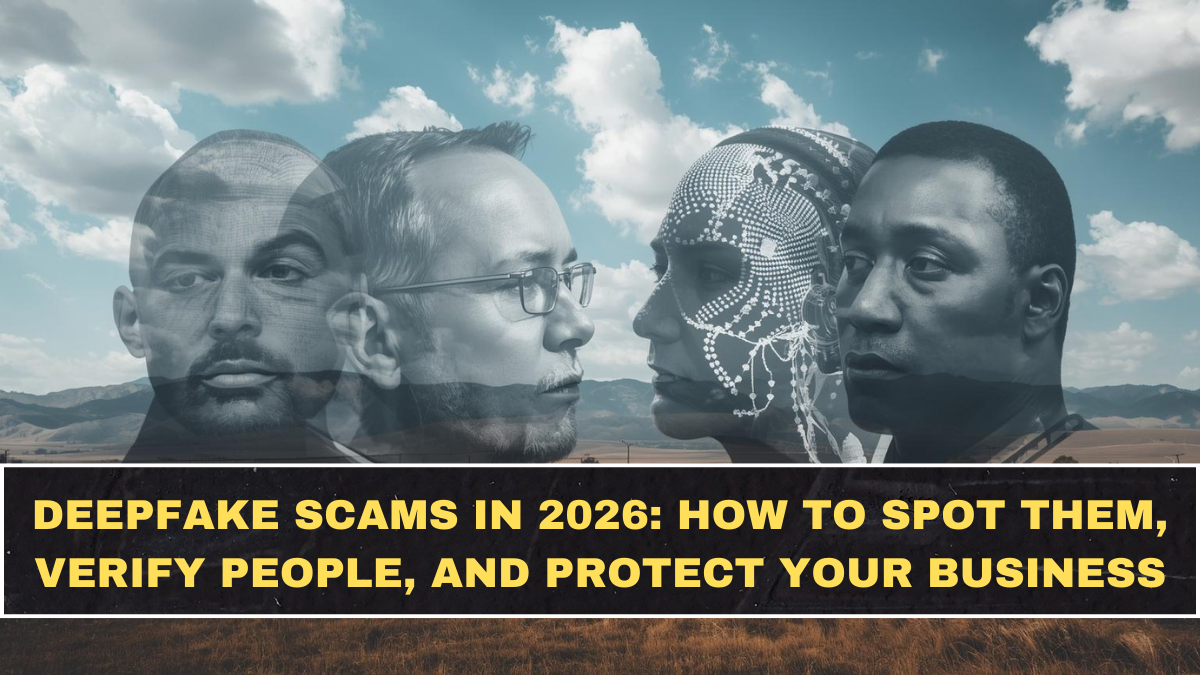
Deepfakes in 2026 are no longer rare, shocking, or limited to viral clips. They have become a routine tool in fraud, social engineering, and impersonation scams. What makes them dangerous is not just how realistic they look or sound, but how easily they blend into everyday communication channels people already trust. Calls, video meetings, voice notes, and short clips are now all potential attack surfaces.
The biggest shift is psychological, not technical. People assume realism equals authenticity, and scammers exploit that assumption aggressively. As a result, deepfake scams succeed not because victims are careless, but because the signals humans relied on for decades no longer work reliably.
Why Deepfake Scams Are Exploding in 2026
The cost of creating convincing deepfakes has dropped dramatically. Tools that once required specialized skills now run on consumer hardware or cloud platforms with minimal setup.
At the same time, trust-based workflows have expanded. Businesses rely on remote approvals, video calls, and voice confirmations more than ever.
This combination creates a perfect environment for impersonation attacks that feel routine rather than suspicious.
The Most Common Deepfake Scam Scenarios Today
Executive impersonation scams are among the most damaging. Attackers mimic a CEO or senior leader to authorize payments or data access.
Customer support impersonation is also growing, where fake videos or voice calls appear to come from banks or service providers.
Romance and identity scams now use short, believable video clips instead of static images, increasing emotional trust quickly.
Why Traditional Red Flags No Longer Work
For years, people were told to watch for robotic voices or unnatural movements. In 2026, those tells are unreliable.
Modern deepfakes include natural pauses, emotional inflection, and realistic micro-expressions. Many are indistinguishable in short interactions.
Relying on “gut feeling” alone is no longer a viable defense strategy.
Behavioral Signals That Still Matter
While visuals and audio can be faked, behavior is harder to replicate consistently. Scammers often push urgency or secrecy early.
Requests that bypass normal process are a key warning sign. Deepfake scams frequently rely on authority pressure.
Context mismatches, such as odd timing or unfamiliar phrasing, often reveal inconsistencies over longer conversations.
Verification Is the Only Reliable Defense
Verification must move beyond recognizing faces or voices. Independent confirmation channels are critical.
This means confirming requests through a second method that the attacker cannot control. Examples include callbacks, internal tools, or pre-agreed verification steps.
In 2026, organizations that rely on single-channel confirmation are inherently vulnerable.
How Businesses Are Updating Verification Workflows
Leading companies now separate identity from authority. Even if someone appears legitimate, permissions are still validated.
Multi-step approvals are used for financial or data-sensitive actions. Automation flags requests that break normal patterns.
Security teams train employees to pause, verify, and escalate without fear of delaying leadership requests.
Deepfake Detection Tools: Helpful but Limited
Detection tools analyze artifacts, compression patterns, and inconsistencies. They are useful as indicators, not guarantees.
False positives and false negatives remain common, especially with short clips or live interactions.
Tools should support human decision-making, not replace verification protocols.
Why Voice Deepfakes Are the Fastest-Growing Threat
Voice cloning requires less data than video synthesis. A few seconds of audio can be enough to replicate tone and cadence.
This makes phone-based scams highly effective, especially for internal approvals or customer service impersonation.
Organizations relying on voice-only confirmation are particularly exposed in 2026.
What Individuals Can Do to Protect Themselves
Individuals should slow down when requests involve money, data, or secrecy. Urgency is a manipulation tactic.
Verifying through known contacts or official channels remains effective. Trust should be earned repeatedly, not assumed.
Sharing less voice and video data publicly also reduces exposure, even though it cannot eliminate risk entirely.
How Regulation Is Responding to Deepfake Abuse
Governments are focusing on disclosure requirements and misuse penalties rather than banning the technology itself.
The challenge lies in enforcement and attribution, especially across borders.
As a result, personal and organizational defenses remain the first line of protection.
Conclusion: Assume Reality Is Verifiable, Not Obvious
In 2026, seeing and hearing are no longer enough to trust. Deepfake scams succeed because they exploit outdated assumptions.
The safest mindset is to treat identity as something that must be verified, not recognized. This shift reduces panic, mistakes, and losses.
Deepfakes are not going away, but their impact can be limited when verification becomes routine rather than reactive.
FAQs
Are deepfakes illegal in India in 2026?
Using deepfakes for fraud, impersonation, or harm is illegal under existing laws.
Can deepfake detection tools fully protect users?
No, they assist but cannot replace proper verification processes.
Are video calls safer than phone calls?
Not necessarily, as both audio and video can be convincingly faked.
What is the biggest mistake people make with deepfakes?
Assuming realism equals authenticity without verification.
How can small businesses defend against deepfake scams?
By enforcing multi-step approvals and secondary verification channels.
Will deepfake scams keep increasing?
Yes, unless verification habits improve across individuals and organizations.