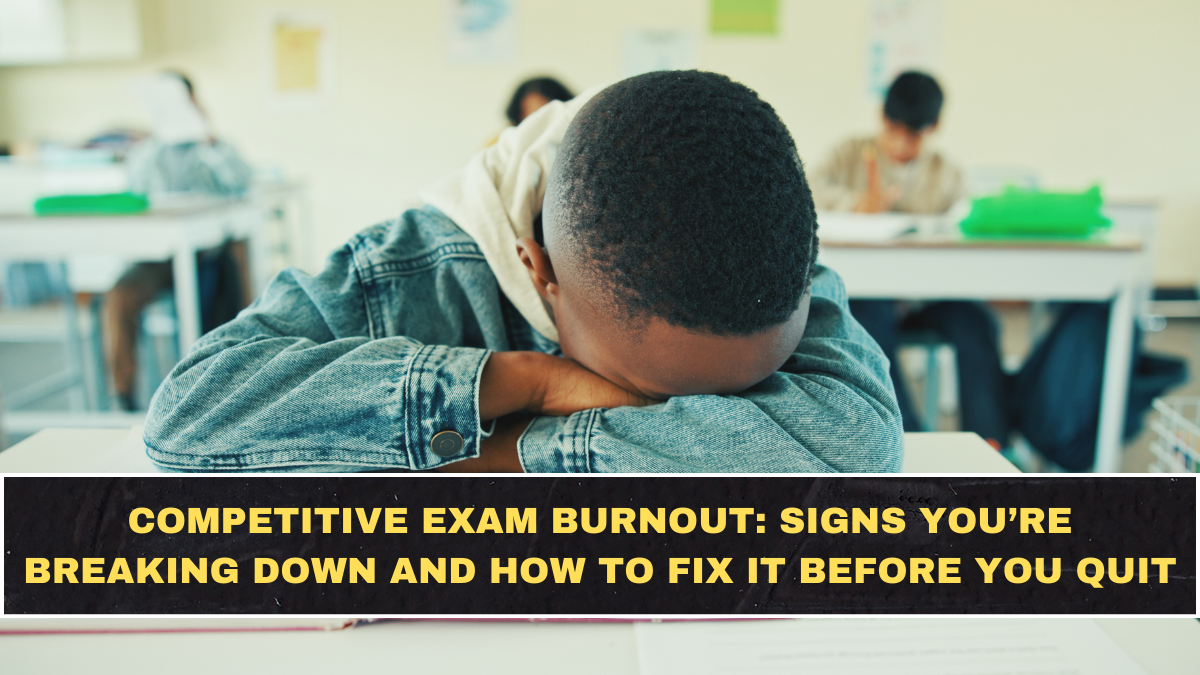
Competitive exams in India have always been demanding, but in 2026 the pressure feels heavier and more relentless than before. Longer preparation cycles, repeated attempts, rising cut-offs, and constant comparison on social media are pushing aspirants beyond healthy limits. Many students believe burnout means weakness, so they ignore early signs until motivation collapses completely.
The uncomfortable truth is that burnout is not caused by lack of discipline. It is caused by poorly designed study systems, unrealistic expectations, and prolonged stress without recovery. This article explains how competitive exam burnout actually develops, how to spot it early, and what a realistic recovery plan looks like in 2026.
Why Competitive Exam Burnout Is Rising in 2026
Preparation timelines have stretched while certainty has reduced. Aspirants now prepare for years without clear signals of success, which creates mental fatigue that no timetable can fix.
Another major factor is information overload. Too many resources, strategies, toppers’ routines, and mock platforms confuse rather than help. Students feel they are always “behind,” even when studying consistently.
In 2026, burnout is driven more by uncertainty than by syllabus volume.
Early Warning Signs Most Aspirants Ignore
Burnout rarely appears suddenly. It builds quietly through constant tiredness, irritability, and declining focus even after rest.
Students often notice they are studying longer hours but remembering less. Small setbacks feel overwhelming, and motivation becomes fear-driven rather than goal-driven.
In 2026, ignoring these signs leads to long-term disengagement, not short-term dips.
Difference Between Laziness and Burnout
Laziness improves with structure and accountability. Burnout worsens with more pressure and stricter schedules.
A burned-out student wants to study but cannot sustain mental effort. Forcing discipline in this phase often deepens exhaustion.
In 2026, mislabeling burnout as laziness ruins otherwise capable aspirants.
How Poor Study Design Causes Burnout
Many aspirants follow rigid schedules copied from toppers without adapting to their own energy patterns. This creates constant guilt and self-blame.
Lack of revision cycles, insufficient breaks, and unrealistic daily targets slowly drain mental stamina. Studying without feedback or milestones also increases anxiety.
In 2026, smart systems matter more than long hours.
Role of Mocks and Comparison Stress
Mocks are meant to guide improvement, but excessive testing without analysis damages confidence.
Comparing scores publicly amplifies self-doubt, especially when preparation stages differ. Aspirants begin to equate self-worth with ranks.
In 2026, mock tests should be diagnostic tools, not emotional weapons.
Practical Recovery Plan for Burnout
Recovery does not mean quitting preparation. It means reducing cognitive load temporarily while rebuilding consistency.
Shorter study blocks, limited resources, and focused revision restore confidence. Physical activity, sleep discipline, and digital boundaries play a crucial role.
In 2026, recovery is an active strategy, not rest alone.
Rebuilding Momentum Without Panic
After burnout, aspirants often try to “catch up” aggressively, which restarts the cycle. Momentum should be rebuilt gradually.
Focus on small wins—completing limited topics well, not finishing the syllabus quickly. Confidence returns through execution, not planning.
In 2026, patience accelerates progress more than panic.
When to Reconsider Your Exam Strategy
Sometimes burnout signals a mismatch between goals and capacity, not failure. Multiple attempts without improvement require honest reassessment.
This does not mean giving up; it means adjusting timelines, exam choices, or parallel career plans.
In 2026, flexibility is not weakness—it is intelligence.
Common Burnout Mistakes to Avoid
Taking complete breaks without structure often increases anxiety. Another mistake is adding new resources during burnout.
Seeking motivation videos instead of system fixes provides temporary relief but no solution.
In 2026, clarity beats inspiration.
Conclusion: Burnout Is a Signal, Not the End
Competitive exam burnout is not a personal failure. It is a signal that the system you are using is unsustainable.
With early recognition, structured recovery, and realistic expectations, most aspirants regain stability and performance. Ignoring burnout, however, leads to quitting not because of inability, but exhaustion.
In 2026, the real skill is not endurance—it is sustainable preparation.
FAQs
Is burnout common among serious aspirants?
Yes. Burnout affects disciplined students more often than casual ones.
Should I stop studying completely if I feel burnt out?
Usually no. Structured reduction works better than complete stoppage.
How long does burnout recovery take?
It varies, but most recover within weeks if systems are corrected.
Can burnout affect exam performance directly?
Yes. It reduces recall, accuracy, and decision-making speed.
Do toppers also face burnout?
Many do, but they manage it early through system adjustments.
Is burnout a sign I should quit competitive exams?
Not always. It may signal the need for strategy change, not exit.