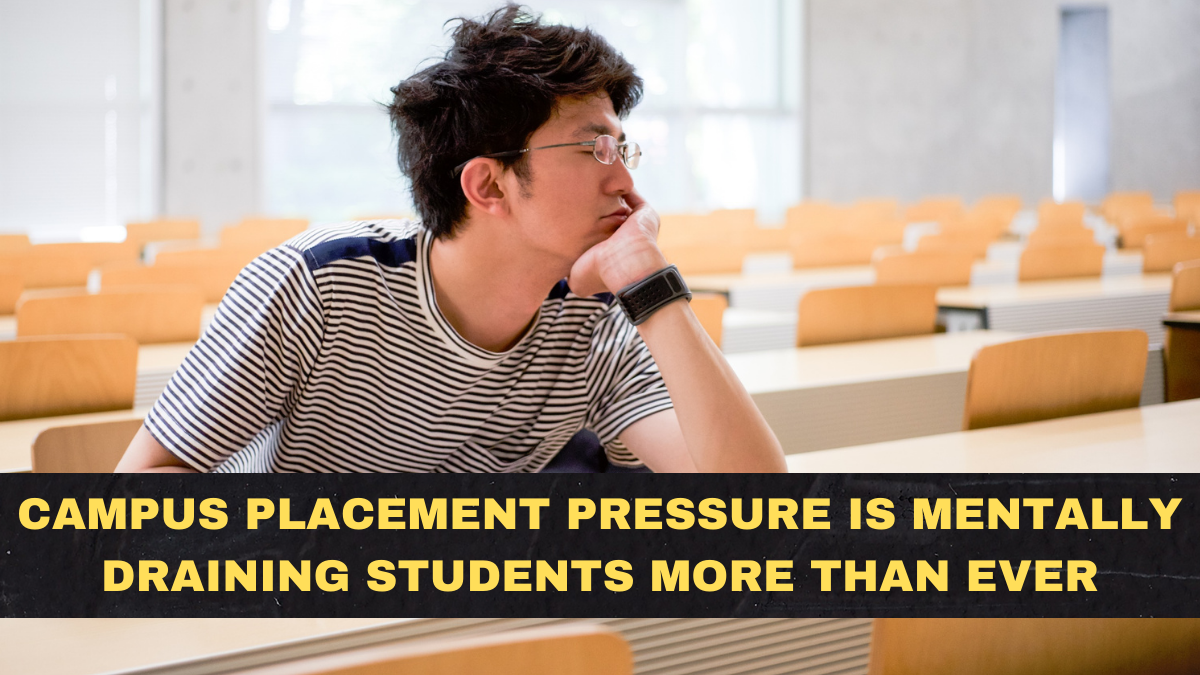
Campus placement season in India has always been stressful, but in 2026 it has reached an intensity that many students are struggling to cope with mentally. What is presented as an opportunity often feels like a public evaluation of worth, intelligence, and future stability. From notice boards to WhatsApp groups, everything revolves around shortlists, rejections, and comparisons, creating an environment where anxiety becomes constant.
The pressure does not come from placements alone. It comes from the belief that this short window will decide the rest of one’s life. Students internalize every rejection as a personal failure, even when outcomes are driven by factors beyond their control. Campus placement pressure in 2026 is not just about jobs; it is about identity and fear of falling behind.
Why Placement Season Feels Like a High-Stakes Exam
Placement season compresses years of preparation into a few intense months. Students feel that missing this window will permanently damage their career prospects.
Colleges reinforce this belief by treating placements as the ultimate success metric. Success stories are highlighted, while those who struggle fade into silence.
In 2026, this framing turns placement season into an emotional battlefield rather than a recruitment process.
The Constant Comparison Culture on Campus
Every shortlist is visible. Every rejection feels public. Students constantly compare packages, companies, and progress with peers.
This environment magnifies insecurity. Even well-performing students feel inadequate when someone else advances faster.
Social comparison during placement season quietly erodes confidence and self-esteem.
Fear of Being Left Behind
One of the most damaging aspects of campus placement pressure is the fear of being the last one unplaced.
Students worry about how they will explain delays to family, relatives, and friends. Shame becomes a powerful motivator, pushing students to accept roles they do not want.
In 2026, fear often drives decisions more than career alignment.
How Colleges Unintentionally Add to the Stress
Colleges focus heavily on statistics, sometimes at the cost of student well-being. Placement rankings, attendance rules, and eligibility cutoffs add layers of pressure.
Students are discouraged from exploring off-campus options during peak placement season. This creates dependency and panic.
The system prioritizes numbers over mental health.
The Emotional Impact of Repeated Rejections
Rejection is common in placements, but it is rarely normalized. Students interpret rejections as proof of inadequacy rather than part of probability.
Repeated failures lead to anxiety, self-doubt, and loss of motivation. Some students disengage entirely.
In 2026, emotional resilience is tested harder than academic ability during placements.
Why Placements Don’t Reflect True Potential
Campus hiring is constrained by time, filters, and company needs. It cannot fully evaluate capability or long-term potential.
Many talented students miss out due to minor factors like interview timing, communication style, or role mismatch.
Treating placement outcomes as final judgments is deeply misleading.
The Pressure to Accept Any Offer
Students are often advised to take the first offer “just in case.” This advice comes from fear, not strategy.
Accepting mismatched roles leads to early dissatisfaction and regret. Students feel trapped before careers even begin.
In 2026, survival-driven choices often override thoughtful career planning.
Mental Health Consequences No One Talks About
Sleep issues, anxiety, panic attacks, and emotional numbness increase during placement season.
Students rarely seek help due to stigma or fear of appearing weak. Suffering becomes normalized.
Campus placement pressure has become a silent mental health crisis.
Why Off-Campus Routes Feel Riskier Than They Are
Off-campus opportunities are often portrayed as last resorts. This belief increases dependency on campus placements.
In reality, many successful careers begin off-campus. However, students rarely hear these stories during placement season.
In 2026, fear of the unknown amplifies placement stress unnecessarily.
What Students Can Do to Protect Themselves
Setting realistic expectations helps. Placements are one opportunity, not the only one.
Focusing on skill-building alongside placements reduces emotional dependence on outcomes. External preparation creates confidence.
Students who detach self-worth from placement results cope better with pressure.
Conclusion: Placement Pressure Is Real, But It Shouldn’t Define You
Campus placement pressure in 2026 has become mentally exhausting because it carries unrealistic emotional weight.
Placements are important, but they are not life verdicts. Careers unfold over years, not placement seasons.
Students deserve support, perspective, and honesty during this phase. Reducing pressure starts with recognizing that one season does not define an entire future.
FAQs
Why is campus placement so stressful in 2026?
Because of intense competition, public comparison, and the belief that placements decide long-term success.
Does not getting placed on campus ruin a career?
No, many successful careers begin off-campus or after initial delays.
Why do students feel ashamed during placement season?
Social comparison and family expectations amplify fear and self-doubt.
Should students accept the first job offer they get?
Only if the role aligns reasonably with their goals. Panic-based decisions often lead to regret.
Do placements reflect real ability?
Not fully. They reflect limited evaluation under constrained conditions.
How can students manage placement pressure better?
By building skills, exploring off-campus options, and separating self-worth from outcomes.