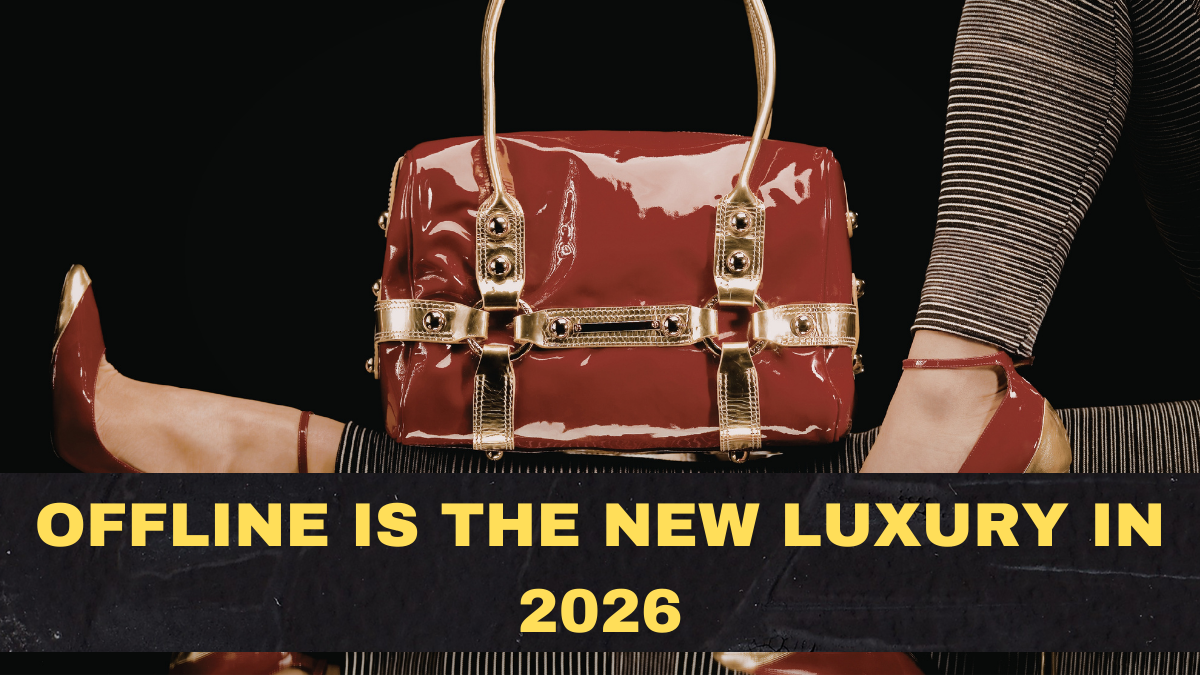
The rise of the offline luxury trend is redefining what wealth, status, and success mean in 2026. In a world saturated with notifications, feeds, meetings, and endless screens, the ultimate privilege is no longer faster devices or smarter apps. It is the ability to disconnect completely.
Phone free living, once associated with retreats and burnout recovery, is now becoming a deliberate lifestyle choice adopted by high earners, creatives, founders, and Gen Z tastemakers. Digital detox is no longer framed as escape. It is framed as power.
In 2026, being unreachable is no longer irresponsible. It is a status symbol.
Why Offline Time Is Now Considered a Form of Wealth
Time has replaced money as the ultimate luxury.
Modern professionals face:
• Constant messages
• Meeting overload
• Algorithmic pressure
• Infinite content streams
• Zero mental silence
People now crave:
• Uninterrupted focus
• Emotional quiet
• Real conversations
• Presence without performance
• Moments without documentation
Those who can afford:
• To step away
• To delay replies
• To silence notifications
Signal something important.
They signal control.
The offline luxury trend thrives because disconnection now equals authority over time and attention.
How Phone Free Living Became a Social Signal
Offline behavior now communicates status.
Common signals include:
• No-phone dinners
• Silent morning routines
• Screen-free vacations
• Delayed response habits
• Limited social media presence
These behaviors suggest:
• You are not reactive
• You are not dependent
• You are not available on demand
• You control your schedule
In high-status circles, constant availability now reads as:
• Overworked
• Anxious
• Low autonomy
In 2026, power is shown through selective absence.
Why Digital Detox Is No Longer About Burnout
Earlier detox culture focused on recovery.
Now it focuses on:
• Performance optimization
• Creativity enhancement
• Leadership identity
• Emotional regulation
• Strategic thinking
High performers now disconnect to:
• Think clearly
• Reduce cognitive load
• Improve sleep
• Strengthen memory
• Regain attention span
Offline time is no longer therapy.
It is performance infrastructure.
This reframing has expanded the audience far beyond wellness seekers.
How Luxury Travel Is Redesigning Around Disconnection
The travel industry embraced this shift first.
Premium experiences now offer:
• No Wi-Fi resorts
• Phone lockers at check-in
• Signal-free zones
• Offline activity programs
• Digital silence packages
Guests pay extra for:
• Zero connectivity
• Guided nature immersion
• Handwritten journaling
• Analog experiences
• Screen-free itineraries
The new luxury travel promise is no longer:
• Views
• Service
• Amenities
It is mental silence.
Why Gen Z Is Leading the Offline Status Movement
Surprisingly, Gen Z drives this trend strongly.
They grew up with:
• Continuous connectivity
• Online identity pressure
• Algorithmic comparison
• Notification addiction
• Digital burnout early
Now they value:
• Authentic presence
• Real-world bonding
• Attention control
• Emotional boundaries
• Offline identity
They actively showcase:
• Phone-free dates
• Screen breaks
• Analog hobbies
• Low online visibility
For Gen Z, offline living is not rejection of tech.
It is intentional use of it.
How Products Are Being Designed for Phone-Free Living
A new product category is emerging.
Popular innovations include:
• Minimalist phones
• Screen-limited devices
• Distraction-blocking apps
• Analog planners
• Focus watches
• Digital-free smart homes
These tools:
• Reduce notifications
• Limit app access
• Encourage offline rituals
• Support attention recovery
Brands now sell:
• Not connectivity
• But protection from connectivity
In 2026, tech luxury is not more features.
It is fewer distractions.
Why Offline Experiences Are Pricing at a Premium
Scarcity drives value.
Offline experiences are expensive because:
• Silence is rare
• Attention is fragmented
• Disconnection requires infrastructure
• Demand exceeds supply
• Status pricing applies
People now pay more for:
• Quiet hotels
• Remote cabins
• Screen-free schools
• Offline retreats
• Digital detox programs
This creates a new hierarchy.
Those who can afford:
• To disconnect
• To delay
• To disappear
Occupy the top tier of lifestyle status.
How Work Culture Is Reinforcing This Trend
Leadership norms are changing.
High-status professionals now:
• Delay replies intentionally
• Avoid constant Slack presence
• Schedule deep work blocks
• Take offline sabbaticals
• Enforce notification boundaries
This behavior signals:
• Authority
• Focus
• Strategic value
• Seniority
• Independence
In contrast, instant response culture increasingly signals:
• Overextension
• Low leverage
• Reactive roles
In 2026, offline time is becoming a leadership marker.
Why Social Media Visibility Is Losing Prestige
Visibility used to equal influence.
Now restraint equals credibility.
High-status profiles show:
• Infrequent posting
• Curated presence
• Long gaps
• Minimal personal exposure
• Controlled narratives
Constant posting now suggests:
• Attention seeking
• Monetization pressure
• Identity dependence
• Algorithm chasing
The offline luxury trend is redefining influence as:
• Scarce
• Selective
• Intentional
• Controlled
Presence now matters more than frequency.
How This Trend Is Reshaping Wellness and Mental Health
Mental health positioning has evolved.
Offline living now supports:
• Anxiety reduction
• Sleep improvement
• Dopamine regulation
• Focus recovery
• Emotional grounding
But it is framed not as:
• Healing
But as:
• Lifestyle optimization
• Elite habit
• Cognitive upgrade
• Emotional intelligence
In 2026, wellness luxury is no longer spa treatments.
It is attention mastery.
Why This Will Become One of the Defining Lifestyle Trends
Long-term forces support this movement:
• Screen fatigue
• AI content overload
• Notification saturation
• Mental health normalization
• Attention economy backlash
Future luxury will include:
• Signal-free homes
• Offline education
• Analog communities
• Attention retreats
• Device-minimal lifestyles
Offline luxury is not anti-tech.
It is anti-noise.
Conclusion
The rise of the offline luxury trend shows how deeply values have shifted in 2026. In a hyperconnected world, the ultimate status is no longer access, speed, or visibility. It is calm, control, and presence.
By embracing phone free living and digital detox, high-status consumers are redefining luxury as the ability to protect attention, time, and emotional clarity.
In this new hierarchy, wealth is not measured by what you own.
It is measured by how much of your life you control without a screen.
And that may be the rarest luxury of all.
FAQs
What is the offline luxury trend?
It is the shift toward valuing disconnection, phone-free living, and digital silence as premium lifestyle choices and status symbols.
Why is phone free living considered luxury now?
Because constant connectivity is universal, while the ability to disconnect requires control over time, work, and social expectations.
Who drives this trend most?
High earners, founders, creatives, and Gen Z tastemakers lead this movement.
Is digital detox becoming mainstream?
Yes. It is now integrated into travel, work culture, wellness, and product design.
Will this trend continue after 2026?
Yes. As digital overload increases, attention and silence will become even more valuable lifestyle assets.
Click here to know more.