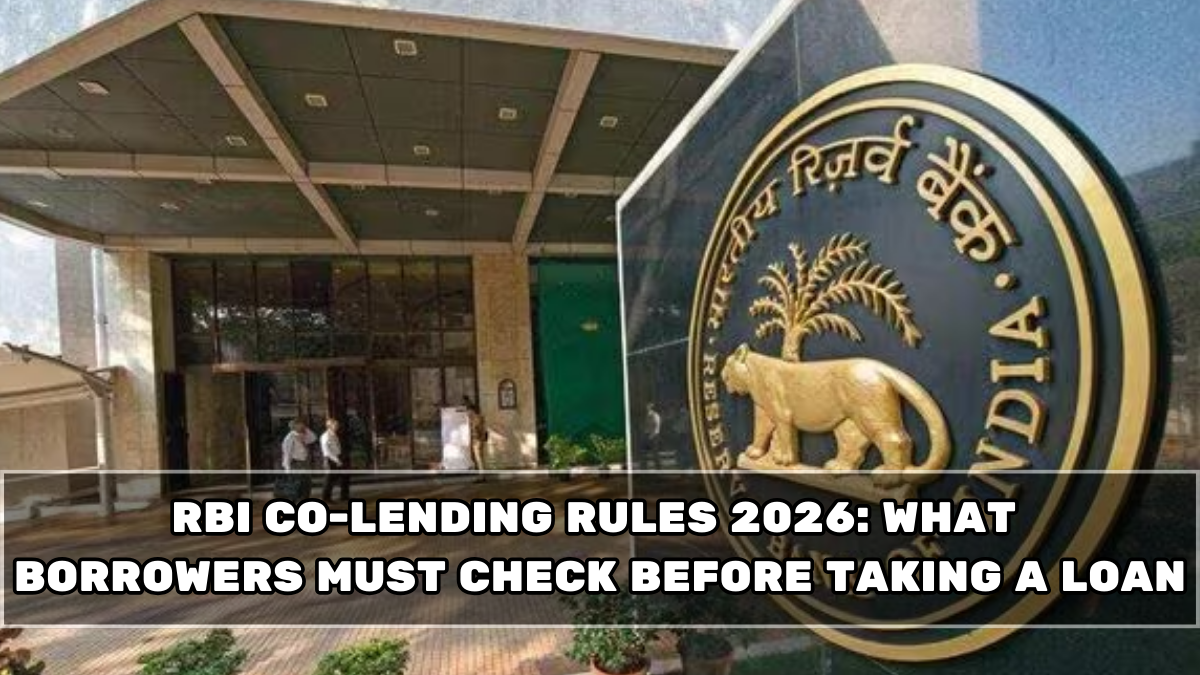
The rbi co lending rules 2026 are meant to fix a long-standing borrower problem: confusion. Co-lending—where two lenders jointly offer a loan—often left borrowers unsure about who set the terms, who collected EMIs, and who to approach during disputes. The updated framework pushes clarity, standardization, and accountability so borrowers can make informed decisions before signing anything.
This article explains what co-lending actually is, what has changed in 2026, and the exact checks borrowers must perform to avoid costly surprises.

What Is Co-Lending and Why It Exists
Co-lending is a partnership model where a bank and a non-bank lender jointly fund a loan. It expands credit access by combining bank capital with NBFC reach.
Why lenders use it:
• Wider borrower coverage
• Risk sharing between partners
• Faster loan processing
• Better pricing efficiency
For borrowers, it can mean access—but only if terms are transparent.
How Co-Lending Affects Borrowers (Quick Overview)
Under co-lending, your loan may be split between two entities. That split matters for documentation, servicing, and grievance redressal—hence the tighter rbi co lending rules 2026.
Who Issued the 2026 Co-Lending Rules
The framework is issued by the Reserve Bank of India, focusing on borrower protection, transparency, and uniform disclosure across lenders.
The goal is simple: borrowers should clearly understand who does what in their loan.
What Changed in RBI Co-Lending Rules 2026
The 2026 updates tighten disclosure and accountability.
Key changes include:
• Clear identification of both lenders
• Standardized loan agreements
• Transparent interest rate structure
• Defined roles for EMI collection
• Clear grievance escalation paths
Ambiguity is no longer acceptable.
What Borrowers Must Check in Co-Lending Loan Documents
Before signing, verify these essentials:
• Names of both lending entities
• Exact loan share of each lender
• Interest rate and how it’s computed
• EMI collection responsibility
• Foreclosure and prepayment terms
• Penalties and late fees
• Grievance redressal contacts
If any of this is unclear, pause. Confusion later becomes cost.
Interest Rates Under Co-Lending: What to Watch
Co-lending doesn’t mean two EMIs—but pricing can be layered.
Check carefully:
• Whether the rate is blended or split
• How changes in benchmark affect EMIs
• Whether both lenders can revise rates
• How often resets occur
The rbi co lending rules 2026 push for clarity—but borrowers must still read.
Who Collects EMIs and Handles Servicing
This is a common pain point.
Possible models:
• One lender collects EMIs on behalf of both
• Digital platform acts as servicing agent
What matters:
• EMI receipt shows correct lender
• Payment failures have clear resolution
• Statements reflect accurate balances
Never assume—confirm in writing.
Foreclosure, Prepayment, and Exit Clauses
These clauses hide real costs.
Verify:
• Prepayment charges (if any)
• Conditions for foreclosure
• Notice period requirements
• How charges are split between lenders
A cheap rate with harsh exit terms isn’t cheap.
Grievance Redressal: Who Do You Contact
Under the rbi co lending rules 2026, borrowers must be told:
• Primary grievance contact
• Escalation timeline
• Final authority if unresolved
Save these details on Day 1—not after a problem arises.
Common Mistakes Borrowers Make
Avoid these errors:
• Focusing only on EMI amount
• Ignoring the second lender’s role
• Skipping annexures and schedules
• Assuming app summaries are complete
Co-lending requires more diligence—not less.
Who Benefits Most From Co-Lending
Co-lending works best for:
• Borrowers with limited credit access
• Small business owners
• Rural and semi-urban customers
• Those seeking faster processing
But only when rules are followed correctly.
Conclusion
The rbi co lending rules 2026 aim to make co-lending safer, clearer, and fairer for borrowers. Transparency is now mandatory—but protection only works if borrowers actively verify documents and ask the right questions before signing.
A loan is a long-term commitment. Understanding co-lending terms upfront saves years of confusion later.
FAQs
What is co-lending in simple terms?
It’s a loan funded jointly by a bank and another lender, shared under one agreement.
Do co-lending loans have two EMIs?
No. You pay a single EMI, but two lenders may be involved behind the scenes.
Can interest rates change under co-lending?
Yes, depending on the agreement and benchmark terms.
Who do I contact if there’s an EMI issue?
The loan agreement must clearly specify the servicing and grievance contact.
Are co-lending loans risky for borrowers?
They are safe if you understand terms, verify documents, and follow disclosures.