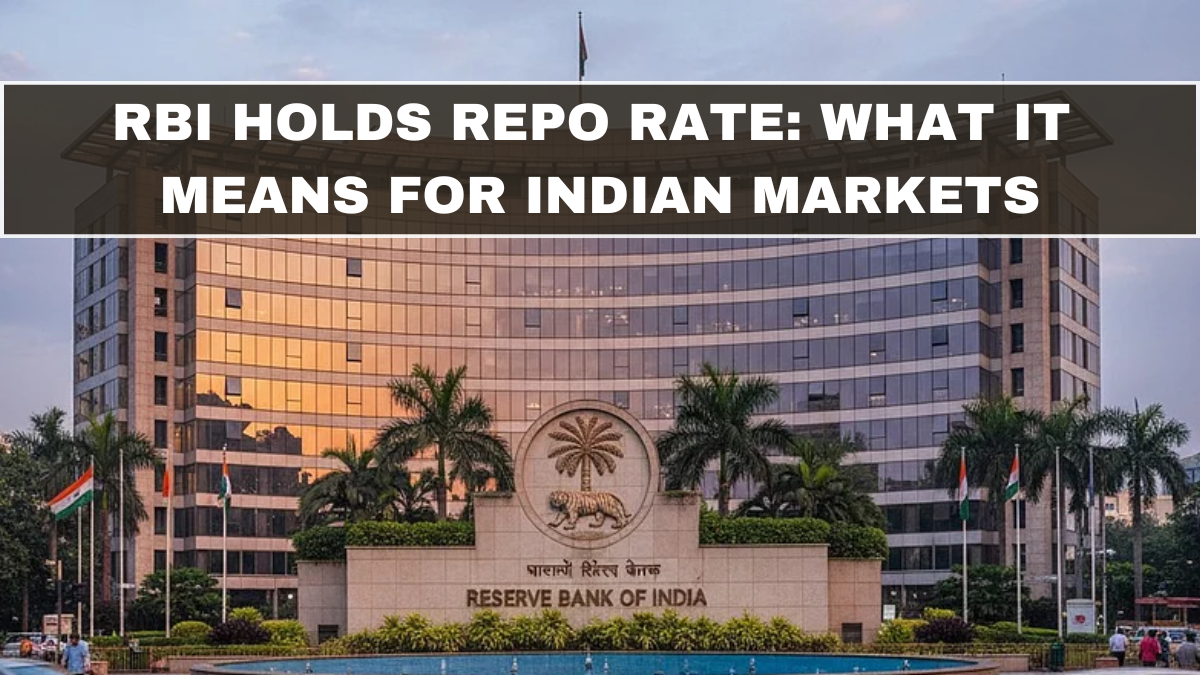
The Reserve Bank of India (RBI) recently decided to hold the repo rate steady in its latest monetary policy review, signaling a cautious approach amid persistent inflationary pressures and moderate economic growth. The decision reflects RBI’s careful balancing of controlling inflation while supporting economic activity.
By maintaining the current repo rate, the central bank provides clarity to borrowers, investors, and markets, indicating that monetary policy will continue to support stability and predictability in the financial system.

What Is the Repo Rate?
The repo rate is the interest rate at which the RBI lends short-term funds to commercial banks. Key points include:
-
Monetary Tool: It is used to regulate liquidity in the economy.
-
Influence on Lending Rates: Affects interest rates on loans, mortgages, and other credit facilities.
-
Inflation Management: Higher repo rates can reduce spending to control inflation, while lower rates encourage borrowing and investment.
-
Economic Signaling: Signals RBI’s assessment of growth and inflation trends.
The repo rate plays a crucial role in shaping borrowing costs, savings decisions, and overall economic stability.
Current Economic Context
India’s economy in 2025 presents a mixed scenario:
-
Inflation Trends: Consumer price index (CPI) remains slightly above RBI’s comfort zone, particularly in food and fuel segments.
-
Growth Dynamics: GDP growth remains moderate, with industrial output and services showing steady expansion.
-
Global Pressures: International crude prices, currency fluctuations, and trade dynamics influence domestic inflation and economic performance.
-
Credit Growth: Lending activity is gradually picking up as businesses and consumers adjust to post-pandemic conditions.
Holding the repo rate allows the RBI to monitor these variables while keeping borrowing costs stable.
Implications for Borrowers
The decision to hold the repo rate directly affects borrowers:
-
Home Loans: Interest rates on housing loans are expected to remain stable, providing predictability for homeowners.
-
Personal Loans & Credit Cards: Borrowing costs remain unchanged, aiding consumer planning.
-
Business Loans: Companies can plan investments and working capital financing without immediate interest rate pressure.
-
Loan EMIs: Stability in repo rate helps borrowers manage monthly installments effectively.
Overall, borrowers benefit from clarity and stability in the credit market.
Impact on Markets
Financial markets respond to RBI’s repo rate decisions in several ways:
-
Stock Markets: Stability in interest rates often supports equity markets, as corporate borrowing costs remain manageable.
-
Bond Yields: Fixed-income instruments like government bonds experience stable yields, benefiting investors seeking predictable returns.
-
Currency Movements: A steady repo rate reduces volatility in the Indian rupee against major global currencies.
-
Investor Confidence: Clear signaling by RBI strengthens market confidence in economic and financial stability.
By holding the rate, RBI aims to maintain equilibrium between growth and inflation without causing market disruptions.
RBI’s Policy Rationale
RBI’s decision to hold the repo rate is guided by multiple considerations:
-
Inflation Targeting: Ensuring CPI inflation remains within the 4% ±2% band.
-
Economic Growth: Supporting businesses and consumers while avoiding overheating of the economy.
-
Global Volatility: Mitigating the impact of global financial fluctuations and commodity price pressures.
-
Liquidity Management: Ensuring adequate credit availability to maintain economic momentum.
-
Monetary Stability: Signaling consistent policy to maintain investor and consumer confidence.
This cautious approach demonstrates RBI’s commitment to a balanced and forward-looking monetary policy.
Future Outlook
The RBI’s repo rate stance indicates a careful monitoring of evolving economic conditions:
-
Inflation Monitoring: Food and energy prices will influence future policy decisions.
-
Growth Indicators: Industrial output, exports, and domestic consumption trends will be critical.
-
Global Developments: Geopolitical events and international trade dynamics can impact policy adjustments.
-
Monetary Adjustments: RBI may adjust the repo rate if inflation accelerates or if growth slows significantly.
Investors, businesses, and borrowers are advised to track these indicators to understand potential rate movements in the near future.
Conclusion
The RBI’s decision to hold the repo rate in 2025 highlights a cautious approach to balancing inflation control with economic growth. By maintaining the current rate, the central bank ensures stability in borrowing costs, supports market confidence, and signals steady monetary policy. For borrowers, businesses, and investors, this move provides predictability, allowing for better financial planning and risk management. India’s financial system benefits from the RBI’s measured strategy as it navigates domestic and global economic challenges.
FAQs
What does it mean when RBI holds the repo rate?
It means the central bank has decided to maintain the current interest rate at which it lends to commercial banks, keeping borrowing costs stable.
How does repo rate affect borrowers?
A stable repo rate keeps interest rates on loans, mortgages, and business credit predictable, helping with financial planning.
Why did RBI decide to hold the rate in 2025?
The RBI aims to balance inflation control with economic growth, considering domestic and global factors.
How do markets react to repo rate decisions?
Stock markets, bond yields, and currency stability are influenced, with steady rates often supporting market confidence.
Could the repo rate change in the near future?
Yes, the RBI may adjust the rate if inflation accelerates or economic growth slows significantly, based on evolving data.
Click here to know more.